Tiny Entryway Guide
Make a Tiny Entryway Work Without Blocking the Door
A small entryway needs a landing zone, not more furniture. Measure the passage first, then give shoes, outerwear and everyday carry items the smallest useful footprint.
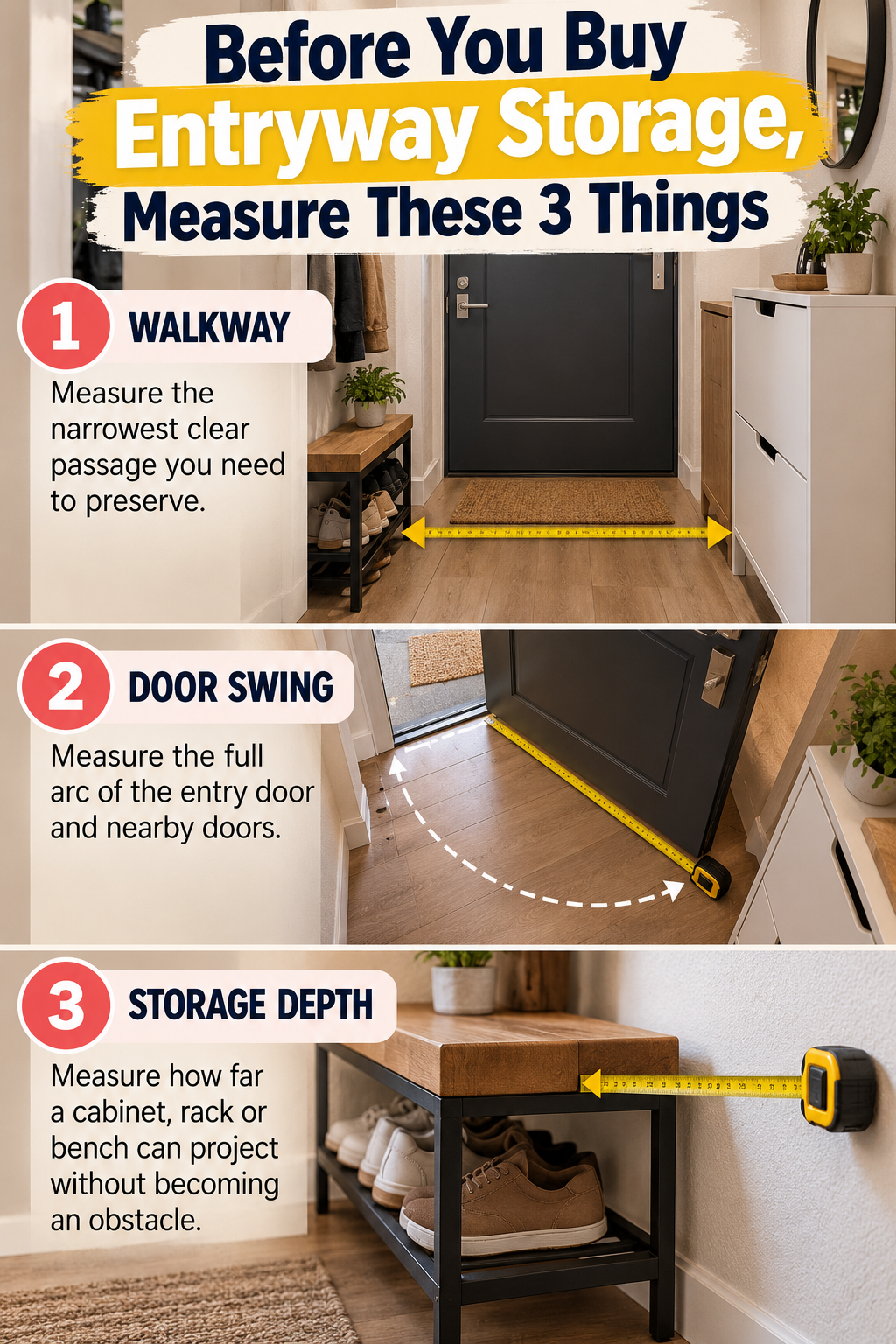
Make the space work first
Useful decisions before more stuff.
Protect the walkway first
Measure the narrowest passage and the full door swing before adding a bench, cabinet or rack. The storage should solve clutter without becoming the new obstacle.
Shoes: depth is the deciding number
For a narrow hall, compare the measured available depth with shallow shoe cabinets, slim racks or under-bench storage. Capacity comes after clearance.
Coats and bags: use one vertical zone
Hooks or a compact freestanding rack can keep daily outerwear near the door. Limit the zone to current-use items so it does not become seasonal overflow.
Keys and everyday items: create one drop zone
A small tray, narrow shelf or controlled cabinet top gives keys and daily carry items a repeatable landing spot without consuming the whole surface.
Bench only when it earns the footprint
A bench can combine seating and shoe storage, but skip it when the passage is too narrow. Clear movement is more valuable than squeezing in another feature.
Shoe tray or shoe rack?
Use a washable boot tray for the small set of wet outdoor shoes that needs to drip and dry. A compact open rack can hold dry daily shoes without piling them on the floor. Let wet footwear dry before enclosing it in a cabinet, and clean the tray when needed. These have different jobs; neither needs to hold the whole household collection. Place them where door movement and the walking route remain clear.